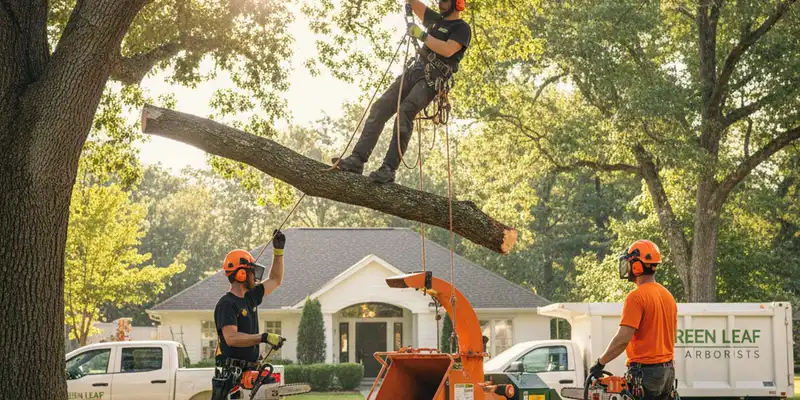
Rocheport sits along the Missouri River bluffs, where historic homes, rural acreage, and riverside properties share a landscape shaped by mature hardwoods. Steep grades, gravel access lanes, and older root systems can make routine tree care more complicated than it looks. The tree care professionals in Columbia within our network know how to evaluate bluff-side canopy risk, manage roots near aging foundations, and clear storm-damaged limbs so properties stay safe and reachable through Missouri River corridor weather.
That is why so many property owners in Rocheport, MO, turn to Arbor Tree Care for dependable year-round maintenance.

Prefer to Talk to An Expert?
(573) 310-2120
Why Rocheport Property Owners Trust Local Professionals to Get It Right
Because they work in this area every day, these professionals understand the bluff terrain, river corridor winds, and dense hardwood growth that define Rocheport. They match each job with the equipment and methods suited to limited access, storm-related damage, and the fungal pressure common in this part of Columbia.
From professional stump removal solutions on bluff-edge lots near Cedar Street to expert tree disease treatment for oak decline near the historic Moniteau Creek corridor, every project is completed with accuracy and long-term property health in mind.
If you care about your landscape, local contractors can help keep it healthy, stable, and safe in Rocheport.
Our Tree-Service Services
in Columbia, MO, Include
A Service Area Designed to Fit Your Rocheport Neighborhood
Bluff-side layouts and narrow lane access mean Rocheport tree care has to be customized, not generalized. That is why local professionals tailor their approach to each riverside slope, hilltop lot, and historic property.
Whether it is a Victorian home in the Rocheport Historic District, a rural property along Moniteau Creek Road, or a riverside cabin near the Katy Trail State Park trailhead, the approach changes to fit the site.
From tree trimming and tree pruning to storm damage response and root protection, services are planned around the neighborhood’s character and each property’s specific conditions.
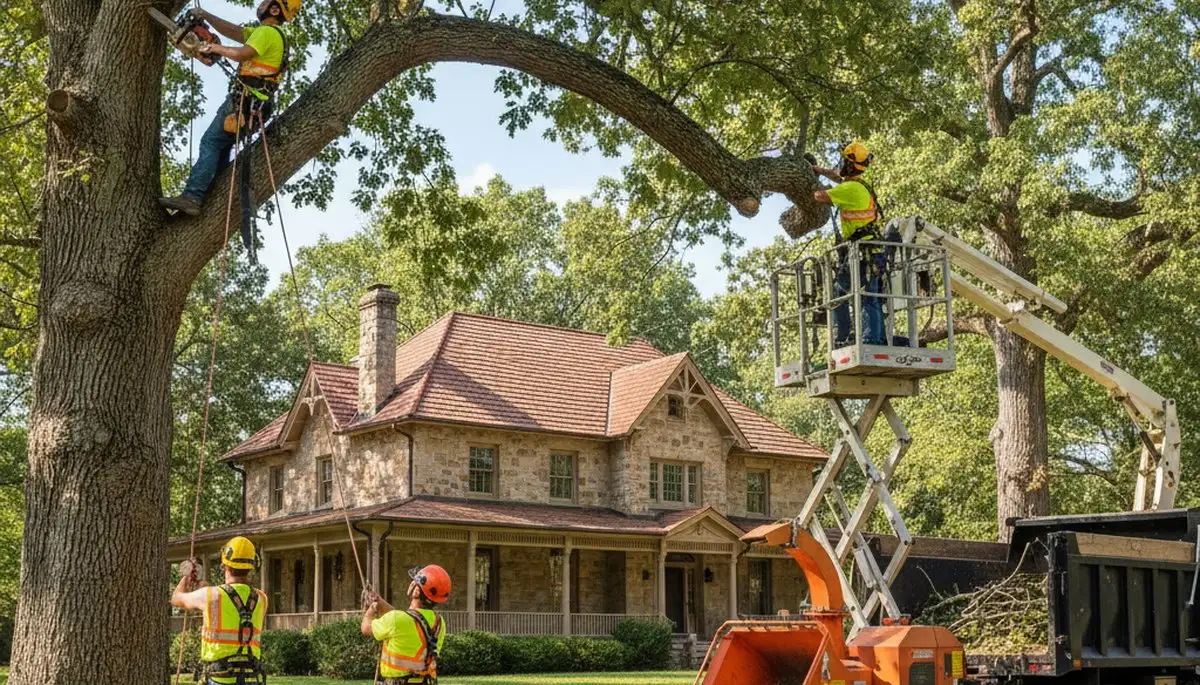
Rocheport’s Deep-Rooted Canopy, Shaped by History
Rocheport is one of Missouri’s oldest river towns, with roots reaching back to the early 1800s and a downtown district listed on the National Register of Historic Places. That history still shows up in aging root systems near old foundations, wind damage across exposed bluffs, and fungal pressure in the river-bottom tree stands that influence how tree work needs to be done today.
Bluff-Edge Root Encroachment and Foundation Risk
Many Rocheport properties, especially those on the upper bluff near First Street and Cedar Street, have mature oak and hickory roots that have expanded into foundation walls, drainage lines, and retaining structures over time. The result can be structural pressure on historic masonry and blocked drainage during Missouri River flood cycles.
Local professionals address root encroachment with targeted root pruning, barrier installation, and selective canopy reduction to help protect foundation stability and reduce access problems.
Storm-Exposed Canopy Along the Missouri River Corridor
The bluff setting offers wide views and mature shade, but it also leaves tree crowns exposed to strong winds. Severe thunderstorms and derecho events can break large limbs and block narrow lanes along Rocheport’s historic streets.
Professionals manage these exposed canopies with structural crown reduction, hazard limb removal, and post-storm debris clearing, all adjusted for tight lot lines and historic property boundaries.
Fungal Disease Pressure in River-Bottom Tree Stands
High humidity and periodic Missouri River flooding make it harder for many Rocheport hardwoods to resist fungal threats such as oak wilt, hypoxylon canker, and Armillaria root rot.
Trusted crews support these stands with targeted tree disease treatments, soil aeration, and tree fertilizing programs that help improve long-term canopy health and lower the chance of sudden structural failure on river-bottom properties.
Seasonal Storm Damage and Emergency Response Demands
Spring and summer storms in Missouri can bring high winds, hail, and ice loading that damage limbs, uproot trees, and block access across Rocheport’s bluff and riverside properties.
Experienced crews respond with rapid emergency tree services, using aerial lifts, rigging systems, and hand-removal methods to restore access and clear structures after storm debris builds up along the Missouri River bluff corridor.
Narrow Lane Access and Equipment Constraints
Rocheport’s gravel lanes, bluff-edge drop-offs, and historic lot lines make large equipment use more difficult than on a typical suburban site.
Local pros rely on compact track loaders and crane-assisted rigging, with a focus on property protection and boundary respect, so tree work fits the historic and riverside layouts found throughout Rocheport.
For ideas on how to keep your Rocheport property in good condition throughout the year, request a free quote from a local professional in Rocheport by calling (573) 310-2120.
Every property deserves safe access. Let Arbor Tree Care help you maintain it!

Kick off your tree service project today!
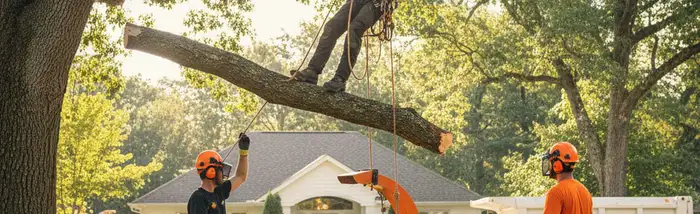
Tree Services in Rocheport, MO: Care for Every Season
From routine canopy maintenance to emergency storm cleanup, here is how local pros help keep properties safe, healthy, and accessible all year:
Routine Tree Trimming and Pruning in Rocheport, MO
- Canopy clearance for historic structures: Tree trimming along First Street and Cedar Street removes overhanging branches that can threaten historic roofs and chimneys during high winds.
- Structural pruning for bluff-edge hardwoods: Tree pruning lowers wind-load stress on exposed oak and hickory canopies along Rocheport’s upper bluff properties.
- Sight-line trimming near the Katy Trail: Seasonal trimming helps maintain safe pedestrian clearance and better property visibility near the Katy Trail State Park corridor and the Rocheport tunnel entrance.
- Crown thinning for river-bottom cottonwoods: Selective thinning manages dense mature cottonwood and sycamore stands along the Missouri River floodplain edge, helping reduce fungal pressure. Property owners along the Boonville corridor can also reference tree trimming services in Boonville, MO for comparable bluff and river-bottom canopy management.
- Pre-storm pruning programs: Planned pruning before Missouri’s spring storm season removes weak limbs before severe weather creates hazards on Rocheport’s narrow residential lanes.
Schedule routine trimming and pruning before storm season so Rocheport’s historic canopy stays intact and property access remains safe.
Tree Removal Services in Rocheport, MO
- Hazardous tree removal near historic foundations: Tree removal of compromised oaks and hickories close to historic masonry foundations in the Rocheport Historic District helps prevent major structural damage.
- Storm-damaged tree removal: Removing uprooted or split trees after storms restores safe access along bluff-side lanes and riverside driveways.
- Dead tree removal from river-bottom stands: Taking down standing dead cottonwood, elm, and ash trees reduces fall risk and fire hazard in Missouri River corridor stands.
- Canopy thinning removal for bluff-edge lots: Selective removal of weaker or competing trees improves the structure of dominant hardwoods on steep bluff properties.
- Shrub removal and understory clearing: Clearing invasive shrubs such as multiflora rose and autumn olive helps restore native understory health and reduce pest habitat on rural acreage properties. Nearby communities with similar acreage needs can also explore tree removal contractors in New Franklin, MO for related stump and canopy management services.
Timely tree removal helps protect historic structures, clear storm debris, and reduce long-term hazards across Rocheport’s bluff and riverside properties.
Stump Grinding and Cleanup in Rocheport, MO
- Historic district stump grinding: Stump removal on narrow First Street and Moniteau Street lots removes trip hazards and stops root regrowth near walkways and garden borders.
- Bluff-edge stump extraction: Grinding and removal on steep bluff lots helps limit root decay that could weaken slope stability and retaining walls.
- Post-removal site cleanup: Debris hauling and site grading after stump grinding restore usable yard space on Rocheport’s compact historic lots.
- Root system clearing for replanting: Full stump and lateral root removal prepares bluff-side and riverside lots for tree planting with native Missouri species suited to the river corridor climate.
- Rural acreage stump field clearing: Bulk stump grinding on larger properties along Moniteau Creek Road clears field obstacles and supports lawn restoration or landscape redesign. Nearby landowners can also look at tree removal contractors in New Franklin, MO for similar stump and canopy services.
Stump grinding reclaims usable space, limits regrowth and disease spread, and prepares Rocheport properties for healthy replanting and long-term landscape improvement.
Emergency Tree Services in Rocheport, MO
- 24-hour storm response: Emergency tree services clear fallen and hanging trees from bluff-side lanes and historic district streets after severe thunderstorms and derecho events.
- Roof and structure clearance: Quick removal of trees and large limbs resting on rooftops or outbuildings helps prevent additional damage after a storm.
- Flood-event debris clearing: Removing Missouri River-deposited debris and uprooted riverside trees restores access to Katy Trail-adjacent properties and riverfront lots.
- Hazard limb stabilization: Emergency rigging and limb removal address partially attached or hanging limbs over homes, structures, and public walkways in the Rocheport Historic District.
- Lightning protection assessment and installation: After lightning strikes, crews assess damage and install protection systems on high-value heritage trees across historic residential properties.
Emergency crews familiar with Rocheport’s bluff terrain and narrow access routes help deliver faster, safer results when storm damage threatens homes and river corridor access.